
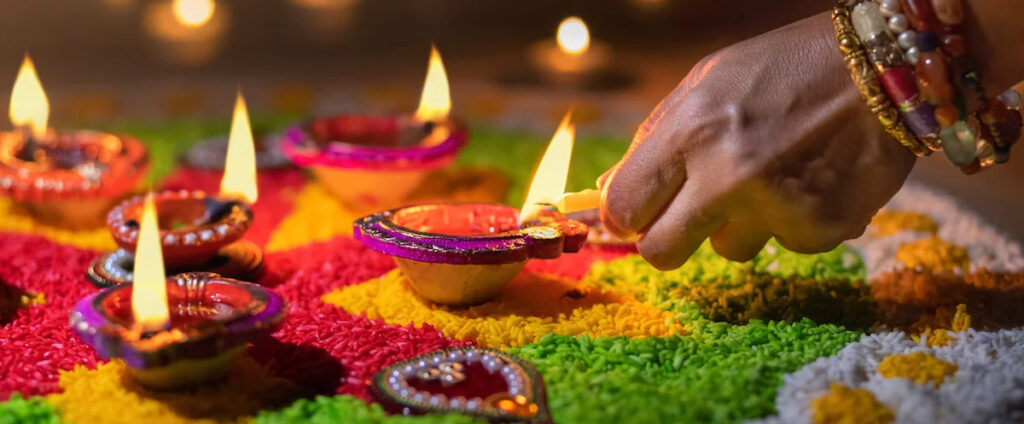
Deepavali, or Diwali, is a major Indian festival celebrated as the “Festival of Lights,” symbolizing the victory of good over evil and light over darkness. It is a multi-day festival, typically falling in October or November, where families decorate homes with lamps (diyas), lights, and rangoli, wear new clothes, exchange gifts, and worship Goddess Lakshmi for prosperity. The celebration includes feasting, sweets, and fireworks, and brings families and communities together.
Meaning and symbolism: The name “Deepavali” means “row of lights” and symbolizes the victory of light over darkness, good over evil, and knowledge over ignorance.
Timing: The main day of Diwali occurs on the new moon (Amavasyaa) day of the Hindu month of Kartik, usually in October or November.
Five-day festival: The celebration lasts for five days, each with its own significance, including Dhanteras, Naraka Chaturdashi, Diwali (Lakshmi Puja), Govardhan Puja, and Bhai Dooj.
Celebrations:
Lighting: Homes are illuminated with clay lamps (diyas), candles, and electric lights.
Decorations: People create colorful patterns called rangoli on their floors.
Worship: Families perform Lakshmi Puja to honor the goddess of wealth and prosperity.
Food: Delicious sweets and savory snacks are prepared and shared.
Family and community: People wear new clothes, exchange gifts, and visit relatives to celebrate with family and friends.
Fireworks: Fireworks displays are a common feature, though there is a growing emphasis on eco-friendly practices.