2025

Festivals

Madras Day

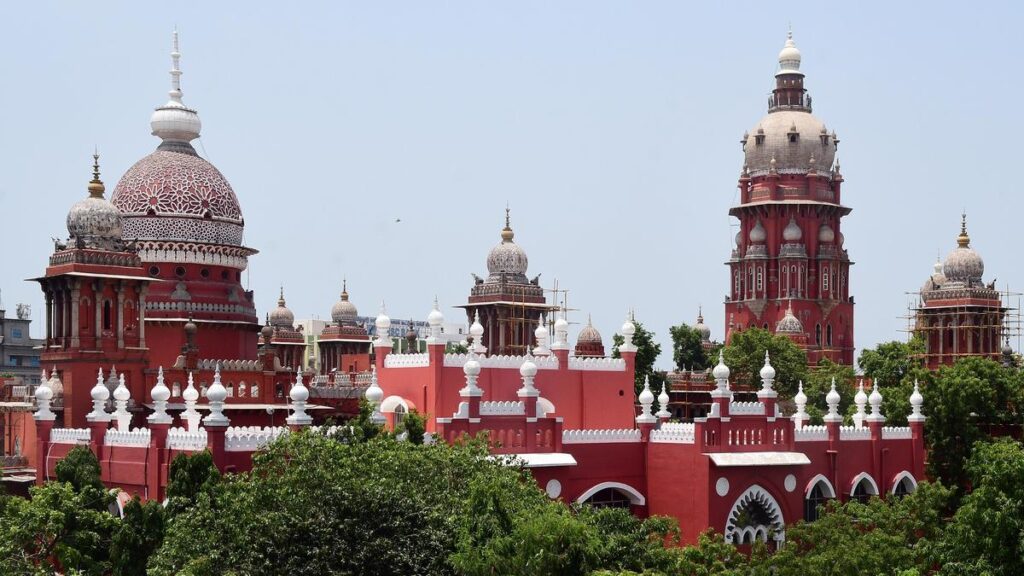
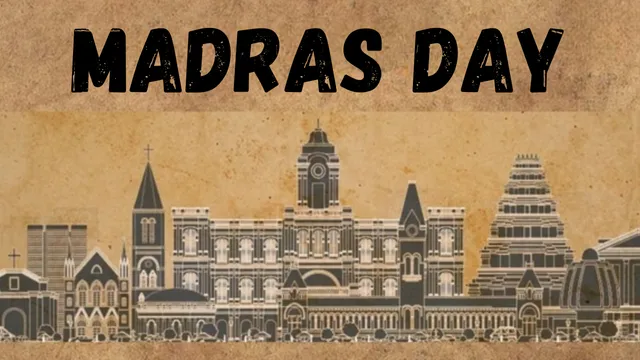
Madras Day is celebrated every year on August 22nd to commemorate the founding of the city of Chennai, originally known as Madras. The celebration marks the day in 1639 when a piece of land was purchased by the British East India Company from the local Nayak rulers, which laid the foundation for the modern city. Madras Day is not just a date on the calendar — it’s a celebration of Chennai’s rich heritage, culture, and community spirit. During this time, the city comes alive with heritage walks, exhibitions, lectures, photography contests, food festivals, and cultural programs that highlight Chennai’s history and evolution. The event encourages residents and visitors to rediscover the city’s historic landmarks, colonial architecture, and local traditions that make Chennai unique. It also fosters a sense of pride and belonging among Chennaites, reminding everyone of the city’s journey from a coastal settlement to one of India’s most vibrant metropolitan cities.

Festivals

Deepavali

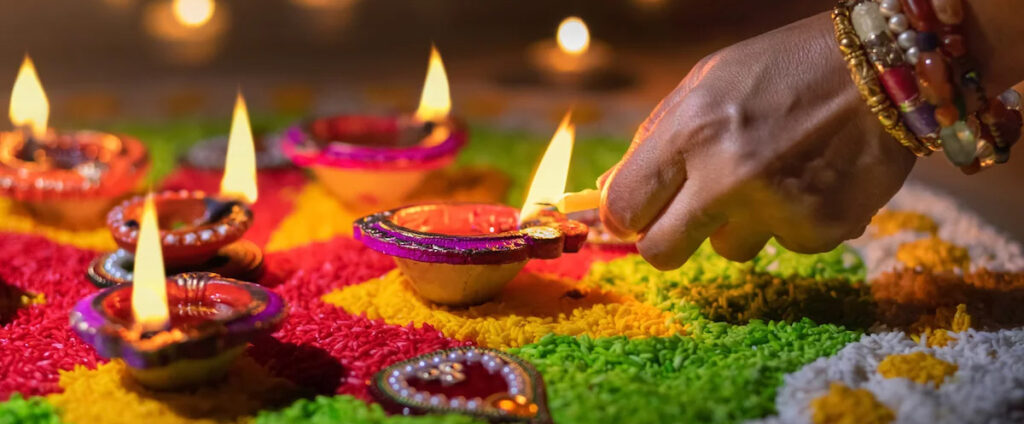
Deepavali, or Diwali, is a major Indian festival celebrated as the “Festival of Lights,” symbolizing the victory of good over evil and light over darkness. It is a multi-day festival, typically falling in October or November, where families decorate homes with lamps (diyas), lights, and rangoli, wear new clothes, exchange gifts, and worship Goddess Lakshmi for prosperity. The celebration includes feasting, sweets, and fireworks, and brings families and communities together.  Meaning and symbolism: The name “Deepavali” means “row of lights” and symbolizes the victory of light over darkness, good over evil, and knowledge over ignorance. Timing: The main day of Diwali occurs on the new moon (Amavasyaa) day of the Hindu month of Kartik, usually in October or November. Five-day festival: The celebration lasts for five days, each with its own significance, including Dhanteras, Naraka Chaturdashi, Diwali (Lakshmi Puja), Govardhan Puja, and Bhai Dooj. Celebrations: Lighting: Homes are illuminated with clay lamps (diyas), candles, and electric lights. Decorations: People create colorful patterns called rangoli on their floors. Worship: Families perform Lakshmi Puja to honor the goddess of wealth and prosperity. Food: Delicious sweets and savory snacks are prepared and shared. Family and community: People wear new clothes, exchange gifts, and visit relatives to celebrate with family and friends. Fireworks: Fireworks displays are a common feature, though there is a growing emphasis on eco-friendly practices.  

Festivals

Karthigai Deepam

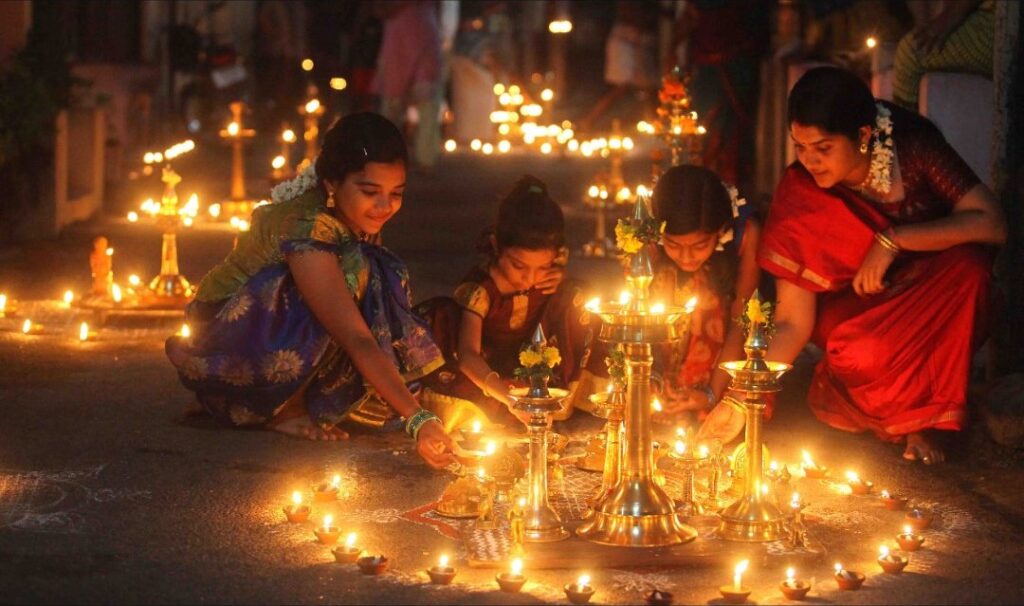
Karthigai Deepam is a major Tamil festival of lights that celebrates the triumph of light over darkness. Celebrated in the Tamil month of Karthigai (November-December), it involves lighting oil lamps in homes and temples to ward off evil and bring prosperity. Key traditions include illuminating homes, decorating with oil lamps, performing special temple rituals, and in some places like Tiruvannamalai, lighting a huge lamp on a hill.  Celebration of light: The core of the festival is lighting oil lamps (diyas) to dispel darkness, both literally and figuratively, and spread joy and prosperity. Tamil significance: It is one of Tamil Nadu’s most important festivals, celebrated with great enthusiasm and unique traditions. Cultural and religious practices: Families clean their homes, create rangoli (decorative patterns) at their entrances, and place lamps on them. Special pujas and rituals are held in temples. Mythological origins: The festival is associated with stories like Lord Shiva’s appearance as a column of fire, challenging Lords Vishnu and Brahma to find its ends. It is also dedicated to Lord Karthikeya (Muruga). Tiruvannamalai Maha Deepam: At the Arunachaleswarar Temple in Tiruvannamalai, the festival is a major event that includes a ten-day celebration with processions and the lighting of a massive lamp on top of a nearby hill on the day of the Maha Deepam. Duration: It is a multi-day festival, often involving three main days or extending for up to ten days in places like Tiruvannamalai. 

Festivals

Pongal

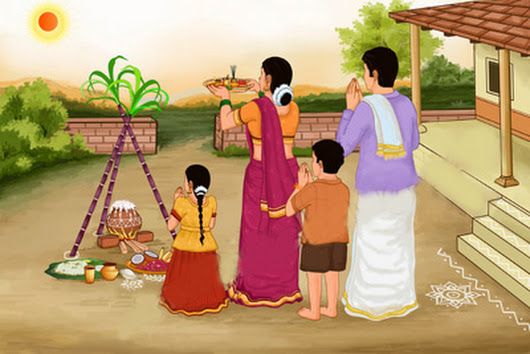
Pongal is a four-day harvest festival celebrated in Tamil Nadu and other parts of Southern India, usually in mid-January. It is a time to express gratitude to the Sun God, nature, and farm animals for a bountiful harvest and marks the beginning of the Tamil month of Thai. Each of the four days has distinct rituals, including the symbolic “boiling over” of a new Pongal dish, honoring cattle, and family gatherings.   Harvest and new beginnings: The festival celebrates the success of the harvest and welcomes the beginning of a new, auspicious month.  Gratitude: It is a way to thank the Sun God (Surya), Mother Nature, and the cattle for their role in agriculture.  Four-day festival: The festivities are spread over four days, with each day having its own traditions: Bhogi Pongal: The first day involves cleaning homes and discarding old belongings, often in bonfires, to symbolize new beginnings.  Surya or Thai Pongal: The second day is the main event, dedicated to the Sun God. Families cook the new Pongal dish, made from freshly harvested rice, milk, and jaggery, and offer it to the sun. The word “Pongal” itself means “to boil over,” symbolizing prosperity.  Mattu Pongal: The third day is dedicated to the cattle and farm animals, which are decorated and celebrated.  Kaanum Pongal: The final day is for family reunions, feasting, and outdoor activities. 

NEWS

SIR is flawed, dangerous: MK Stalin announces state-wide protest on November 11

Tamil Nadu Chief Minister MK Stalin called the Election Commission’s Special Intensive Revision “flawed and risky,” alleging it could lead to voter deletions. He announced a statewide protest on November 11 and launched a DMK helpline. Tamil Nadu Chief Minister MK Stalin says Special Intensive Revision ‘dangerous’ and a ‘voter removal attempt’. Tamil Nadu Chief Minister MK Stalin on Sunday escalated his attack against the Election Commission’s Special Intensive Revision (SIR) of the voter list, calling it “flawed, confusing, and dangerous” and alleging it was part of a conspiracy to remove genuine voters. He announced a statewide protest on November 11 and said the DMK would fight the issue “legally and publicly.” Speaking after an all-party consultation, Stalin said a petition had already been filed in the Supreme Court challenging the SIR process. He reiterated that the DMK was not opposing corrections to the electoral roll, but objected to the “hurried, unclear, and error-prone” implementation. “A correct and true voter list is the base for an honest election,” Stalin said, claiming the SIR exercise was being rushed without adequate time or clarity. “Even well-educated people will have their heads spinning while filling this form,” he added, pointing to repeated demands for personal and “relative details” without definition. He cited instances where Block-Level Officers (BLOs) allegedly failed to visit homes, carried limited forms, or issued only around 30 forms a day. He questioned how officials could distribute and process nearly three lakh forms before the draft roll deadline of December 7. “At this range, how can they finish it? This only proves our fear that a large number of voters could be removed,” he said. Stalin also questioned why photographs were asked to be pasted in the form even as the state election officer had reportedly said it was optional. He warned that even small mistakes could result in deletion of voters, with removal ultimately left to the discretion of Electoral Registration Officers (EROs). “First mistake is a complete mistake,” he said. The Chief Minister accused the opposition of spreading “fake information” and attempting to “remove the votes of the poor” through the process. He said the BJP had colluded with the Election Commission, referring to Rahul Gandhi’s recent allegations. Stalin also noted that Kerala’s Pinarayi Vijayan and West Bengal’s Mamata Banerjee had opposed the SIR. He urged the public to proactively locate their BLOs, collect and fill forms correctly, submit them, and collect the acknowledgement slip. “If you ask whether your vote will be removed, we can’t give a definite answer,” he cautioned, adding that vigilance was the only way to protect voting rights. Stalin announced a DMK helpline, 80654 20020, to assist citizens with queries during the SIR process. “This is not just for DMK members but for everyone,” he said. “The danger of stealing your vote has reached your doorstep. Let’s unite, act, and be vigilant.” ‘CONSPIRACY TO REMOVE MINORITY VOTERS’ Backing the Chief Minister, Deputy Chief Minister Udhayanidhi Stalin accused the Union Government of bringing the SIR “just to stop our victory,” alleging a “BJP conspiracy” to remove minority and marginalised votes. “Close to 65 lakh voters were removed in Bihar. Similarly, they are attempting to remove votes of the minorities and oppressed,” he said, urging people to remain vigilant “until SIR is complete.” Udhayanidhi also attacked Prime Minister Narendra Modi, saying the PM had “forgotten he is a Prime Minister” and was inciting friction between states. Referring to Modi’s remarks in Bihar about Tamil Nadu, he said, “The only person harassed here is Governor RN Ravi, and that too it is not us harassing him. As he is constantly harassing people of Tamil Nadu, they are harassing him back.”

NEWS

TVK has no foundation, AIADMK driven by fear: Udhayanidhi Stalin mocks Opposition

Tamil Nadu Deputy Chief Minister Udhayanidhi Stalin attacked Vijay’s TVK, calling it a party without ideological foundation. He mocked TVK using cardboard monument analogies. He also accused EPS of misleading AIADMK cadres and being driven by fear. Speaking at a DMK event in Chennai, Udhayanidhi said some leaders were entering politics with no ideological foundation. In a pointed dig at actor-politician Vijay, he likened TVK to cardboard replicas of the Taj Mahal and Eiffel Tower displayed at exhibitions. “A small wind is enough,” he said, arguing that such parties lacked substance and stayed afloat only on hype. Udhayanidhi also drew a contrast between the DMK and AIADMK over the Emergency period. He said while DMK founder M Karunanidhi stood firm on retaining the party’s identity, the AIADMK changed its name to appear like a national party. “This is the difference between DMK and AIADMK,” he said, adding that the DMK continued to be driven by ideology while “fear drives” EPS. Continuing his criticism, Udhayanidhi claimed EPS had been misleading his party cadre about alliance prospects. He mocked the AIADMK chief for promising the entry of major allies but later holding another party’s flag and calling it “initiation.” Comparing him to a student unprepared for an exam, he said EPS was in a situation where he “knows nothing” despite last-minute efforts. Udhayanidhi asserted that while DMK leadership remained committed to its principles, the Opposition was struggling to stay relevant and united.

NEWS

Tamil Nadu Assembly junks Governor Ravi’s opinions on Bill to set up Siddha University

The governor has not been conferred powers to express opinions on a Bill before its passage in the the Assembly. R N Ravi stipulated in his message to the House that his views must be brought to the attention of the members at the time of the introduction of that Bill in the Assembly. Tamil Nadu Assembly, by adopting a resolution, on Thursday rejected Governor RN Ravi’s opinions on a Bill seeking to set up a Siddha varsity asserting only MLAs have the right to propose amendments and legislation is the Assembly’s exclusive right. Chief Minister M K Stalin, referring to the proposed Tamil Nadu Siddha Medical University Bill, 2025 said since it falls under the category of a Financial Bill, the governor’s recommendation must be obtained under Article 207 (3) of the Constitution to enable its examination by the Assembly. After ascertaining public opinion, the draft Bill, which was prepared by the Health Department, was verified by the Law Department and considered by Health Minister Ma Subramanian. Later, a copy of that draft Bill was sent to Governor Ravi. However, the governor, without following the usual procedure contemplated under the Constitution, expressed his opinions regarding certain provisions in the draft Bill. Also, Ravi stipulated in his message to the House that his views must be brought to the attention of the members at the time of the introduction of that Bill in the Assembly. “This is contrary to the Constitution and our Assembly rules. When a Bill is debated in the Assembly, only the MLAs elected by the people have the authority to propose amendments, withdraw such amendments (if the explanation provided by the government is accepted by legislators) or seek a vote,” the CM said. The governor has not been conferred powers to express opinions on a Bill before its passage in the the Assembly. “Therefore, this Assembly cannot accept the opinions included in the message received from the Governor,” the CM said amid thumping of desks by ruling party legislators. Furthermore, the governor, who should have used the usual term of “consideration,” (in the context of consideration of the Bill by the House) has unconstitutionally picked the term of “appropriate consideration.” What is the meaning of the word “appropriate” here? It means “must examine in a suitable or in a fitting manner”. It suggests that this Assembly might examine Bills in an “unsuitable” or “unfitting” manner, which diminishes the dignity of the House and is unacceptable. “Legislation is the exclusive right of this Assembly. Since no MLA who believes in state autonomy would accept the message (to the extent of his opinions on the draft Bill) from the governor, going into the Assembly records, I do not wish placing on record such opinions (on the draft Bill),” the CM said. Stalin moved a resolution rejecting the governor’s opinions and it was adopted unanimously. The CM said in the resolution: “This Assembly rejects the opinions of the governor and the portions containing the word that diminishes the dignity of the Assembly which are present in the message sent by the governor to the Assembly for the examination of the Tamil Nadu Siddha Medical University Bill, 2025.” The TN Siddha Medical University Bill, 2025, (introduced in the House on October 16, 2025) aims at facilitating the establishment and incorporation of a varsity for Siddha, Ayurveda, Unani, Yoga and Naturopathy, Sowa-Rigpa and Homeopathy in the state. According to the Bill, the Tamil Nadu CM shall be the chancellor of the university and the health minister the pro-chancellor.Against the background of the tug-of war between the Raj Bhavan and the DMK regime over the appointment of vice-chancellors to state varsities, the Bill empowers the chancellor in respect of appointment of the vice-chancellor.

NEWS

Don’t alienate 1.6 acres of temple land in Chennai: Madras High Court

Justice P.B. Balaji passes the interim order on a writ petition filed by two trustees of the 343-year-old Kandakottam Kandaswamy Temple near Central Railway Station Two trustees of the 343-year-old Kandakottam Kandaswamy Temple at Rasappa Chetty Street, near the Puratchi Thalaivar Dr. M.G. Ramachandran Central Railway Station in Chennai, have approached the Madras High Court alleging an attempt by third parties to alienate 1.6 acres of the temple land located at Royapuram. Justice P.B. Balaji has ordered that there shall be no alienation or encumbrance of the property until he could hear the case next on November 19. He also made it clear that the interim order had been passed only to protect the temple property and that none of the parties to the case should take advantage of the order. According to the Hindu Religious and Charitable Endowments (HR&CE) department, the Kandakottam Temple in Park Town was established in 1672 by two individuals named Mari Chetty and Kandapandaram who brought the idol of the main deity from the famous Kandaswamy Temple at Tiruporur near Mamallapuram. After the original structure of the temple fell into despair, the present structure was built with stones about 200 years ago. Subsequently, a magnificent Gopuram (temple tower) was added by Kalirathna Chettiar and the temple was now being administered by the Muthukumaraswamy Devasthanam. In their affidavit, the two writ petitioners K. Sendilvellan and V.C. Kandhaswamy said, a devotee named Pauckam Kandhaswamy Chettiar had bequeathed one cawney, five grounds and 1,570 square feet of his land to the temple for the performance of the annual Vedarpari festival. The land, located at Surya Narayana Chetty Street in Royapuram and totally measuring 71,170 square feet (1.6 acres), was dedicated to the temple as a specific endowment by way of a registered will executed on February 12, 1886. The will was also duly probated by the Madras High Court. Stating that the specific endowment was created with a condition that the property should not be alienated even after the death of executor and that it should be owned by the temple alone, the petitioners said, even Pauckam Kandhaswamy Chettiar’s adopted son Pauckam Appu Chettiyar confirmed the endowment in 1919. Thereafter, various trustees were appointed to perform the duties associated with the endowment. The petitioners alleged one of the trustees T. Parthasarathi Chetty executed a “fraudulent” will in 1997 in favour of his sons and daughters by claiming absolute ownership over the property which houses a mandapam as well as a few idols. Claiming that the legal heirs of Parthasarathi Chetty had been attempting to alienate the property for long, the petitioners said, their request for declaring it to be a non endowment was rejected by the Deputy Commissioner of Hindu and Religious Endowments (HR&CE) department in 1994. The Deputy Commissioner’s decision was confirmed by the Commissioner of HR&CE and also by an Assistant City Civil Court in Chennai which had dismissed a 1996 civil suit in 2015 on the ground of default and non prosecution. Subsequently, the legal heirs attempted to obtain patta (revenue record on land ownership) for the property. The petitioners informed Justice Balaji that the Tondiarpet Special Zonal Tahsildar issued the patta on July 15, 2025 on the basis of a no objection certificate given by the chairman of the Devasthanam’s board of trustees. They said, the executive officer of the temple too failed to take necessary action against the chairman. Stating that they have now approached the Revenue Divisional Officer to cancel the patta, the petitioners urged the court to restrain the third parties from alienating the property. Justice Balaji granted time till November 19 for all the respondents in the case to file their counter affidavits and passed an interim order till then.